

Blog post written by Anne Hanscomb: https://caringfromafar.co.uk/
No one gives you a manual when you become a carer. There is no training course, no set of instructions, no job description, and certainly no step-by-step guide for how to navigate life when your 91-year-old father has dementia, lives alone in South Wales, and you live over an hour away in Wiltshire.
We are all just learning on the job. Some days we sink. Other days we swim. In fact, if we are being completely honest, that shift can happen hourly, not daily. You can go from feeling like you have things under control at 10:00 AM to staring at a wall in sheer exhaustion by midday.
In 2023, Dad was officially diagnosed with mixed dementia—a diagnosis I had been pushing to get for over a year. By that point, juggling my career as an Operations Director with Dad’s increasing needs and constant reassuring phone calls was simply no longer workable. It felt like a double 24/7 job. So, at 53, I retired thanks to an amazing husband.
Managing care from a distance is a constant minefield. When you are operating on no sleep, zero energy, and zero time to plan ahead because getting through today is taking every ounce of focus you have, trying to problem-solve remotely feels like wading through cement. Things that would take 2 minutes if I was physically there end up taking hours remotely as dads ever changing attention span goes awry.
Yet, through trial, error, and a lot of sleepless nights, I’ve picked up a few vital lessons along the way.
The Stepping Stone Approach
If there is one thing I have learned about people living with dementia, it’s that they generally do not cope well with sudden change.
Waiting for a crisis to make a massive change usually ends in distress for everyone. Instead, I’ve learned to adopt a "stepping stone" approach: making small, subtle adjustments as early as possible. Introducing minor changes to his routine or environment bit by bit acts as a bridge to the bigger changes we will inevitably need to implement down the line.
Being proactive rather than reactive keeps Dad calmer, and it keeps me calmer, too. You may be surprised to know dad was wearing a tracker watch a year before his diagnosis so that I know he is now used to it. No point getting one after he has wandered. I told him his watch will call me if he falls so I can talk to him through it to check he’s ok, but I didn’t mention that it’s also a tracker so if he wanders I can track him and alert the police to his exact location.
Stealth Support & "Visitors":
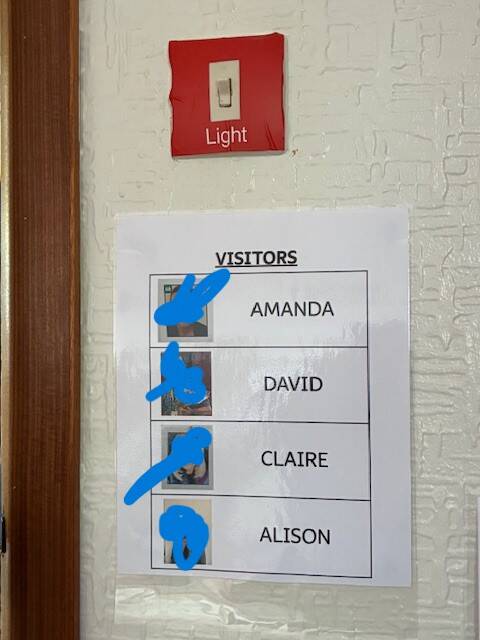
As a proud Welshman, Dad resisted the idea of 'carers' or being monitored. So, we removed those words entirely. We don't have carers; we have 'visitors' - the gardener the cleaner the carers all have the grand title of visitor. 'How lovely you have a visitor today.' Because he’s 91, I told him his visitors are completely free—I handle all his finances behind the scenes via Power of Attorney so he never sees a bill. They first started to come in, clean a bit, but mostly they make him tea, companionship maybe together read poetry, and share lunch together….that’s gradually increasing to more care.
They all agreed to their photos being on the wall with the title” visitors “ - I have even included myself and my sister to keep consistency.
Personal Care
Dad’s carer / visitor shaved one half of dad’s face and I did the other half very badly …to be honest it wasn’t totally on purpose- it’s harder than I thought to shave someone - have you tried ? Dad was very nice about my attempt but suggested that maybe I let Alison the visitor shave him in future - hooray a shave and changing socks was our stepping stone approach to him accepting personal care from her.
The Trial-and-Error Exhaustion
That said, being proactive requires thinking differently about everyday solutions—and that mental effort is exhausting. You spend hours researching, planning, and implementing what you think is the perfect fix for an issue, only to realise two days later that it doesn't work. Or worse, it worked for a week, and then stopped.
There is nothing quite as demoralising as thinking, "Right, I've solved that issue," only to find out you haven't.
The Jigsaw
Dad has never really been into jigsaws, however an amazing charity were given out free jigsaws for Christmas to combat loneliness so I thought I’d apply for him. The charity gave us a Relish easy jigsaw designed for dementia and dad said that will give a visitor something to do but I’m not going to even open it.
Language & The Older Brain Team
Early on, I made a conscious choice never to use the word 'dementia' with him. Dad knows he struggles, but why slap a scary label on it? Instead, I normalise it: if your eyes age, you wear glasses; if your legs age, you use a stick; and when your brain ages, it just means it takes 10 minutes off occasionally! That frame shifts everything and explains it in any easy way for him.
We even joke, I hope my brain doesn’t take the same 10 minutes off as yours or we will be in a right pickle!
When it comes to tech or new ideas, I frame everything as a 'test.' I’ll say, 'Can we just try this for a few days it was suggested by the older brain team who are the experts at tips to help you keep doing the things you love? If you hate it, we’ll throw it away.' I call the memory clinic and dementia adviser the older brain team…dad thinks all these ideas come from them when they are coming from me but it’s so much easier to get him to buy into trying new things that were suggested by the older brain team experts!
“Dementia Tech"
Why are the special technology gadgets aimed at elderly care or dementia support priced so differently and are they even tested by people with dementia? Nobody ever thinks about how easy it is to use the chargers of these things.
Trying to introduce new tech that is probably not going to work out or maybe for just a few days is so exhausting. Dementia is fluctuating and unpredictable. What works Monday might fail on Friday. However standard tech ignores how motor skills, spatial awareness and visual processing change over time , making us carers feel we have to use dementia friendly technology.
You shouldn't have to break the bank trying out numerous things, just to keep a vulnerable person safe in their own home. Honestly wouldn't it be amazing if there was a library where you could borrow things to see if they actually work first. Some councils or charities have assistive tech sessions for you to see these things up close, but it’s still challenging to know if it will work and for how long.
Don’t spend additional money on new equipment. Instead start with whats already free hidden inside accessibility functions on the tech everyone is used to:
iPad Assistive Access
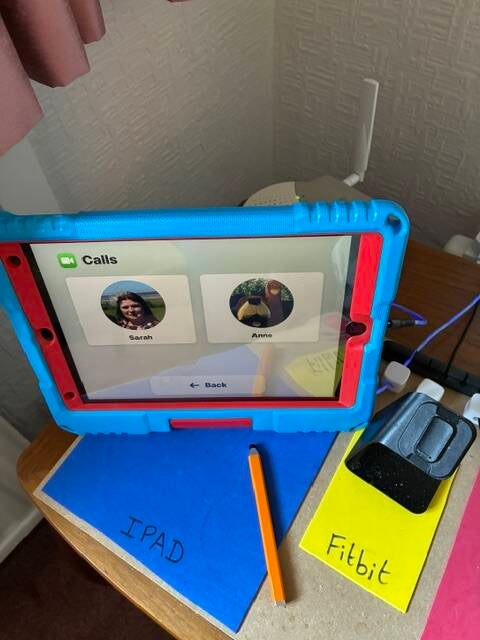
We have considered lots of special elderly computers, tablets and communication devices. Some are as a big as a tv and would really confuse dad. Instead we just used the free built in assistive access function on his iPad so he just taps my photo and I magically appear. It’s adapted with his needs regularly over the past few years.
SENTAI AI Device
With the SENTAI AI device in his kitchen, I asked him to help me trial it to see if we could break it……Two years later, he just calls it 'his friend in the kitchen.' Our SENTAI device handles repetitive daily reminders like time for a drink, your visitor will arrive soon to make lunch, or nearly time for Columbo, taking 50 alarms off my phone.If you have never used AI , I will be honest I had concerns to start with but I like the fact it does my checklist with dad but in a chatty type of way. It has a conversation with dad and remembers the language he uses - How about a nice cold drink from the door in the blue dot ? Dad has written poetry for over 50 years and Sentai will write dad a poem every day and they chat about how good or bad it is. Sentai will ask dad if he enjoyed his lunch and as its a little warm today maybe we should think about an extra drink to keep hydrated. It can remind him to take his tablets. It can add things to the shopping list and will read my text messages sent to it to dad and he can speak his reply which it will send me ......" It really is a friend in the kitchen.
Stealth Cameras & Remote Fixes
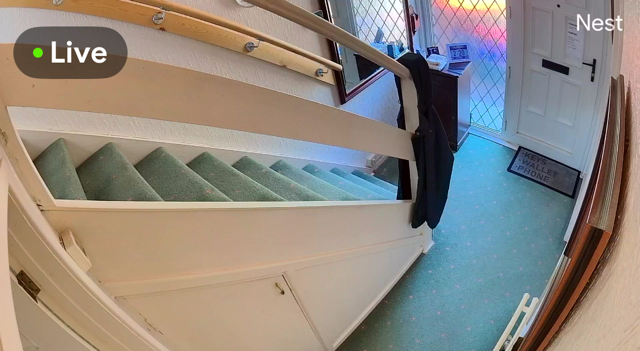
I told Dad the camera in the hallway sends me a photo of any strangers at his door ….maybe I didn’t mention that it alerts me if he goes near the front door or starts putting on a coat or shoes so I can distract him and maybe stop him wandering. When he struggles with his TV remote, I secretly fix it via an app on my phone and tell him he’s a genius for fixing it himself.
Environmental Anchors
We’ve even adapted the physical environment to bypass confusion. He kept getting the fridge and freezer confused - in his defence they sound similar and do similar things. So we renamed them and I have no idea why, just like lots of things with dementia ,but it works.We put a giant blue sticker on the fridge and a Welsh dragon flag on the freezer. Now I just ask, 'Could we put the milk back in the blue dot?' It bypasses the confusion, protects his pride, and lets him stay independent in his own home.
Managing Middle-of-the-Night Confusion & Digital Boundaries
The middle-of-the-night calls are brutal. When the phone rings at 3:00 AM, your heart rate spikes instantly. Because Dad has lost his concept of time, telling him 'I'll call you back in two minutes' doesn't work anymore—that language doesn't register.
The Sleep Clock & AI Song
To help him understand time at night, we introduced a children's sleep-training clock in his room. The rule is simple: 'If the clock is red, we stay in bed.' I got AI to make a little song about it.
Digital Boundaries & Do Not Disturb
To protect my own health, I had to set strict digital boundaries. My phone's Do Not Disturb mode is programmed to block everything except direct calls from Dad, his FaceTime, and his front-door camera alarm. That way, I know if my phone sounds, it demands immediate action, but I'm spared the noise of everything else.
The Power of Talking It Out & Setting Boundaries
I know how fortunate I am to have a solid support network. My husband, my sister, a few close friends, and our local dementia advisers have been absolute lifelines. The first rule is look after yourself or you can’t look after someone else.
Managing his care relies on unbreakable boundaries: my sister takes two set days a week. During those 48 hours, I turn my phone completely off to recharge, while my husband acts as the emergency contact. I need that time to be me again.
When you are trapped in your own head, running through endless scenarios, just saying your ideas out loud to someone who understands is invaluable. Half the time, talking through a potential solution with someone else helps me realise immediately whether it’s actually viable or if I need to head back to the drawing board.
The Surgery Dummy Run
Dad was due to have cataract surgery on both eyes with general anaesthetic. Yes I’m aware of the pitfalls of general anaesthetic but he wouldn’t understand the instructions and would have been frightened. We were more concerned about the after care - would us moving in distress him and disrupt his routine. The dementia adviser was more concerned about getting the drops in his eyes after surgery that are very important….so just talking about that out loud, resulted in us trying some non evasive eye drops (call it a dummy run) prior to surgery which dad point blank refused to let us do……. Decision made and he’s not having the surgery.
Laughing So You Don't Cry & Making New Memories
Dementia is heartbreaking. Watching a strong, independent person lose their grip on details is easily the hardest thing I’ve ever navigated. But if you don't find the humor in the daily absurdities, the weight of it will crush you. It's about still having fun and making new memories together while we can.
Artificial Gardening
Neither of us have my late mum's gardening skills and we have no idea what’s a weed or a plant. Luckily dad's gardener suggested we have a raised flower bed with artificial flowers in to look after. Dad jokes our bit looks better than the gardener's bit!

The 3-Way FaceTime
We set up 3-way FaceTime calls with his brothers—one living in Australia aged 93 and one in Wales aged 85. They count on me for the tech magic, but seeing them all laughing and chatting together is so lovely.
Sneaking Ham into the Pub
I sneak ham into his local pub because he’s become such a fussy eater. Then when the waiter comes over and announces that today’s special is ham, eggs and chips (his favourite) but they only have one portion left, dad's overjoyed!
The 91 Mug
Last week, Dad made a cup of tea with me then promptly poured it straight away without even tasting it. He informed me with absolute clarity that the mug stated Dad is 90 and he is now 91 (which is true !) so he couldn’t use the Dad is 90 mug. Did I correct him? Absolutely not. I immediately ordered 6 new mugs saying DAD IS 91 in the hope he will find one of them when we make a cup of tea. The numerous Dad is 90 mugs are in my local charity shop.
When I need him to do something, I don't give instructions—I ask for his help. I’ll ask, 'Dad, can you help me find a "Dad is 91 mug?' Knowing there are 5 in front of him. Everything is teamwork ….dad two heads are better than one and if we do this together we will be sorted in no time.

See, it’s all about creative thinking. It makes me realise if I wasn’t doing all the firefighting and caring, how many more of these things could I do with dad whilst we still can? Because I know that is going to change so soon.
Finding those small moments of connection and joy—is where the magic happens and I realise dementia has taught me so much about it and myself, but how I still have so much to learn.
We Don't Always Get It Right
I certainly don't get it right every time. I don't have all the answers, and I still have days where the frustration and fatigue take over.
The absolute hardest part is the battle between his reality and my foresight. On one hand, there's his self-blame. He has great awareness of his changes .It breaks my heart to hear him say he needs to 'pull himself together' or needs 'a kick up the bum,' when he is physically and mentally dealing with a progressive brain condition.
Then there's the burden of being the planner and fixer . Because of my background, I see the future differently . I am immensely proud that we've kept him independent in the home he loves, but I also know this isn't a permanent. It's a very lonely place to grieve for the future before it’s even arrived—coming to terms with the fact that 'home' might not always be viable, while others including dad and my sister are still in a more hopeful place.
Also being the fixer, I am always looking for solutions and for ways to improve his situation and make him feel confident and happy….thats draining and I know from experience that’s hard when you are firefighting daily to step back and look ahead. I can’t fix dementia but maybe I can fix dad staying safe and independent at home for as long as possible.
But here is the reality: Dad is 91. He is still safe. He is still living independently in his own home., where he has lived for 63 years - And that is down to our amazing hard work and refusal to give up.
If you are currently sitting in the middle of the caregiving minefield—feeling exhausted, second-guessing your decisions, and trying to manage it all from miles away—know that you aren't alone. None of us were handed a handbook for this. We are all just doing the absolute best we can, one problem at a time.
Its the reason I have put all the ideas we have used for dad into a free website to help others…even if you are not caring from afar , I really hope that something would be useful for your situation.
Wherever you are caring from you need practical ideas and solutions to keep your sanity - hopefully I can help with the things that have been useful for us. I wanted to build the resource I wish I’d had - showing people magnetic charging cables, how to use the already installed free accessibility functions like apples assistive access , how to use simple visual anchors like bright stylus pens and Bumpons .
You don’t always need high tech high cost inventions to keep someone safe and independent - you just need a bit of creativity, and the headspace which when caring for someone is the greatest challenge to find .
If sharing a bit of my journey and some of the ideas in my website , gives you even a small moment of comfort or a practical idea to try, then I've achieved what I set out to do.